Warning lights do not arrive on a schedule, but the conditions that trigger them in Kannapolis do. Heat stresses charging systems in summer, cold mornings expose weak batteries and low tires in winter, pollen clogs filters in spring, and long fall road trips reveal worn brakes and tired sensors. Organizing the dash by season turns a random set of symbols into a calendar you can anticipate, checking the likely systems before their hardest months instead of reacting after a light appears on the worst possible day.
This is not a reason to ignore a light out of season. Any red light, oil, temperature, brake, or charging, demands an immediate response in any month. The calendar is for the amber warnings and the preventive checks that keep red ones rare.
The year, season by season
| Season | Lights most likely | Why now | Preventive check |
|---|---|---|---|
| Spring | Tire pressure, check engine | Temperature swings change tire pressure; pollen loads filters and sensors | Set tire pressures, inspect cabin and engine filters, scan stored codes |
| Summer | Temperature, charging, battery-related groups | Heat loads cooling and charging systems; batteries degrade fastest | Test battery and charging, check coolant condition and fan operation |
| Fall | Brake, ABS, check engine | Road trips and wet leaves expose worn brakes; cooler air changes sensor readings | Measure brake pads, test brake fluid condition, review any pending codes |
| Winter | Tire pressure, battery and charging, ABS | Cold drops tire pressure and battery output; ice uses ABS most | Check pressures monthly, load-test an aging battery, confirm all dash bulbs light at startup |
Reading the big four in any season
Oil pressure in red means pull over and switch off, in July or January, because pressure loss destroys bearings quickly. Temperature in red means pull over and never open a hot cap, because the system is pressurized and scalding. The brake light means check the parking brake first, then treat a soft or sinking pedal as a tow in every season. The battery-shaped charging light means the car is running on stored charge only, so distance is limited and a stall is coming; head for help immediately rather than finishing errands. Season changes the likelihood of these lights, never the response to them.
Amber lights follow the calendar more loosely. Tire pressure warnings cluster on the first cold mornings of fall because pressure falls with temperature, revealing tires that were already a little low. Check engine lights often follow seasonal fuel changes, temperature extremes, and the simple fact that marginal sensors fail at the edges of their range, which seasons provide.

What a bulb check tells you in ten seconds
Every seasonal routine should start with the startup bulb check, because no warning system can help you if its light never lights. Turn the key or press start without cranking where your car allows it, and watch each symbol appear and then clear. Oil, temperature, brake, charging, airbag, ABS, tire pressure, and check engine should all show briefly. A symbol missing from that sequence means a bulb, LED, or cluster fault has silenced exactly the warning you may need later, and that absence is itself a finding worth reporting. Compare against your manual's startup illustration the first time you do this, because makers arrange the sequence differently, then repeat the glance at each season change until the normal pattern is familiar enough that an abnormal one stands out immediately.
While you are watching, note how long the check engine light takes to clear after starting and whether any light returns under load, on a hill, or with the air conditioning running. Intermittent lights are data, not false alarms. A light that appears only hot, only cold, or only in rain is describing the conditions of its fault, and writing those conditions down beside the date gives a technician a starting point that a simple code read cannot provide.
Building the habit in Kannapolis
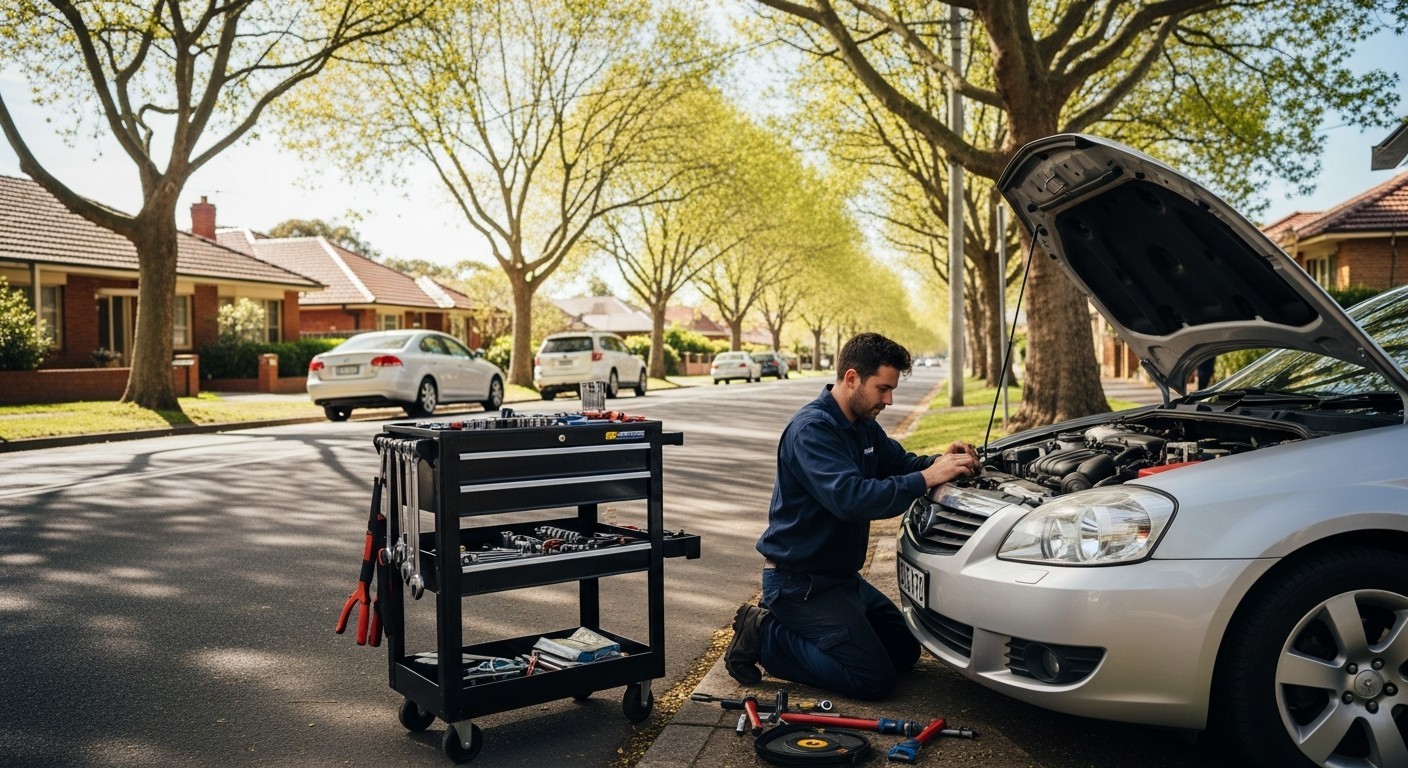
Pick four moments you already remember: the first pollen week, the first truly hot week, the start of school, and the first frost. At each one, do the matching row of the table: pressures, a battery and charging test, brake measurements, filter checks. Note any light that flickers, stays on a second too long at startup, or appears under specific conditions like rain or cold starts. Those notes turn a vague report into a diagnosis a technician, including a mobile visit from Eric's Mobile Mechanic's LLC, can act on quickly. A dashboard watched by season rarely surprises its driver, and surprises are the expensive version of every warning in this guide.
Common questions
Why does my tire light come on every fall?
Pressure falls as temperatures drop, so a tire that was slightly low in summer crosses the warning threshold on the first cold mornings. Set pressures to the door placard, not the tire sidewall.
Are warning lights more common in summer or winter?
Different ones peak in different seasons. Heat stresses batteries, cooling, and charging in summer, while cold exposes weak batteries and low tires in winter.
Should I scan for codes even with no light on?
A periodic scan can reveal pending codes that have not yet set a light. It is a useful part of a seasonal check, especially before a long trip.
Photos in this guide are representative stock images.
← All guides from Eric's Mobile Mechanic's LLC← Back to Eric's Mobile Mechanic's LLC